 RaiseUp
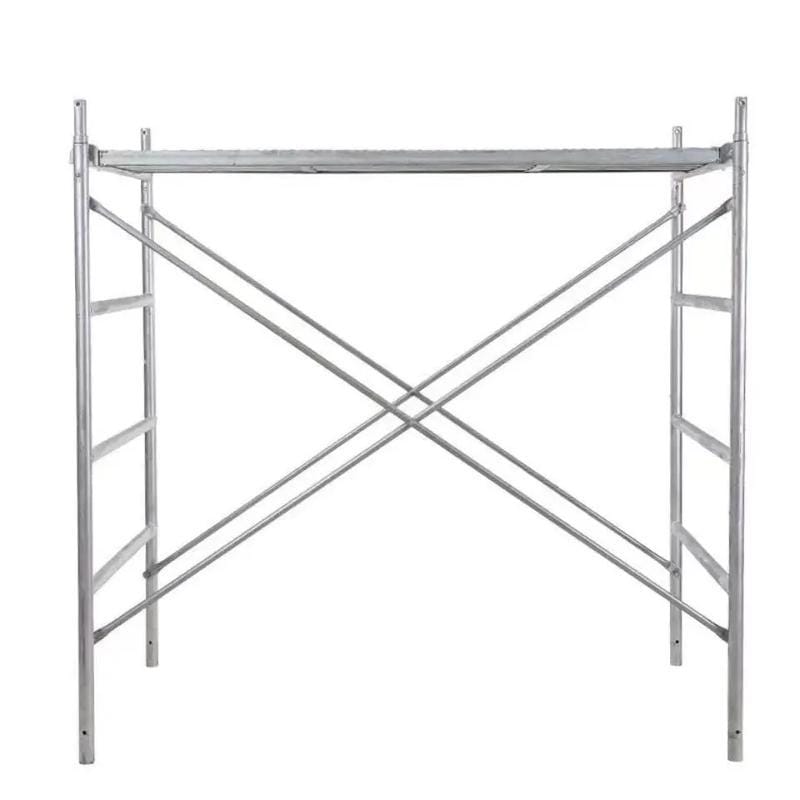
Two suppliers quote the same 48.3 mm scaffold tube. One ships 2.75 mm wall, the other 3.25 mm. Prices differ by roughly 15%, and on site nobody can see the difference until the tube is on a scale or under load. This is the single most common quality gap in scaffolding procurement, so it is worth understanding exactly what the number changes.
What the standards actually require
The nominal outside diameter of a standard scaffold tube is 48.3 mm in almost every market. What differs is the wall thickness and the standard behind it:
| Standard | Market | Typical wall thickness |
|---|---|---|
| EN 39 / EN 10219 | EU, UK, Middle East projects specified to BS | 3.2 – 4.0 mm |
| BS 1139 | UK legacy specs | 4.0 mm |
| AS/NZS 1576 | Australia, New Zealand | 3.0 – 3.2 mm |
| GB/T 13793 (common export grade) | General export, price-driven tenders | 2.5 – 2.75 mm |
| JIS G3444 | Japan, some Southeast Asia | 2.8 – 3.2 mm |
A 2.75 mm tube is not automatically “bad”. It is a lighter tube made to a lighter standard. The problem starts when a 2.75 mm tube is sold against a specification that calls for 3.25 mm.
The numbers that matter
Wall thickness changes three things: weight, section modulus and joint behaviour.
| Tube (48.3 mm OD) | Mass | Section modulus Z | Relative bending strength |
|---|---|---|---|
| 2.75 mm | ≈ 3.09 kg/m | ≈ 4,240 mm³ | 100% |
| 3.00 mm | ≈ 3.35 kg/m | ≈ 4,600 mm³ | 108% |
| 3.25 mm | ≈ 3.61 kg/m | ≈ 4,860 mm³ | 115% |
| 4.00 mm | ≈ 4.37 kg/m | ≈ 5,700 mm³ | 134% |
So a 3.25 mm tube is about 17% heavier than 2.75 mm but roughly 15% stronger in bending. The important consequence is deflection: a lighter tube sags more under the same span, and on a working platform that shows up as a springy deck that crews stop trusting.
What it does to the joint
Wall thickness also decides how much thread, wedge or rosette contact area you get. A thin wall deforms earlier at the coupler, so right-angle couplers slip at lower torque and ringlock rosette welds are more likely to tear the tube wall in overload. If your site uses couplers heavily, do not go below 3.0 mm.
How to check a delivery in ten minutes
- Weigh ten random tubes on a luggage scale. A 6 m 3.25 mm tube should be around 21.7 kg; a 2.75 mm tube around 18.5 kg.
- Use a caliper on both ends of each tube — thickness varies along a coil, and thin ends are common.
- Look at the cut end. A clean, even wall is a good sign; a visibly tapered or oval end usually means a re-rolled strip.
- Ask for the mill certificate (EN 10204 3.1) and check the heat number stamped on the tube matches it.
- Check the galvanising. 60–80 µm zinc is normal for export; thin, patchy coating on a “hot-dip” claim is a red flag.
Which thickness to buy
- 2.75 mm — light access work, short-term projects, markets where price is the only decision criterion. Accept shorter inspection intervals.
- 3.25 mm — the safe default for export projects in the EU, Middle East and Latin America, and for any job where the scaffold is designed rather than improvised.
- 4.0 mm — shoring towers, heavy-duty platforms, and anything carrying material loads rather than people.
Buying 2.75 mm at 3.25 mm prices is the expensive option. If you need a tube specification confirmed against your project standard, send us the drawings and the applicable code — we quote the wall thickness that fits, not the one with the best margin. See our steel scaffold frames and scaffolding system ranges for the matching components.